Dr. Clayborne (Not pictured), Jaquesta Adams, Nia Pollard, and Alexia Moore presented during Research Week at Howard University.
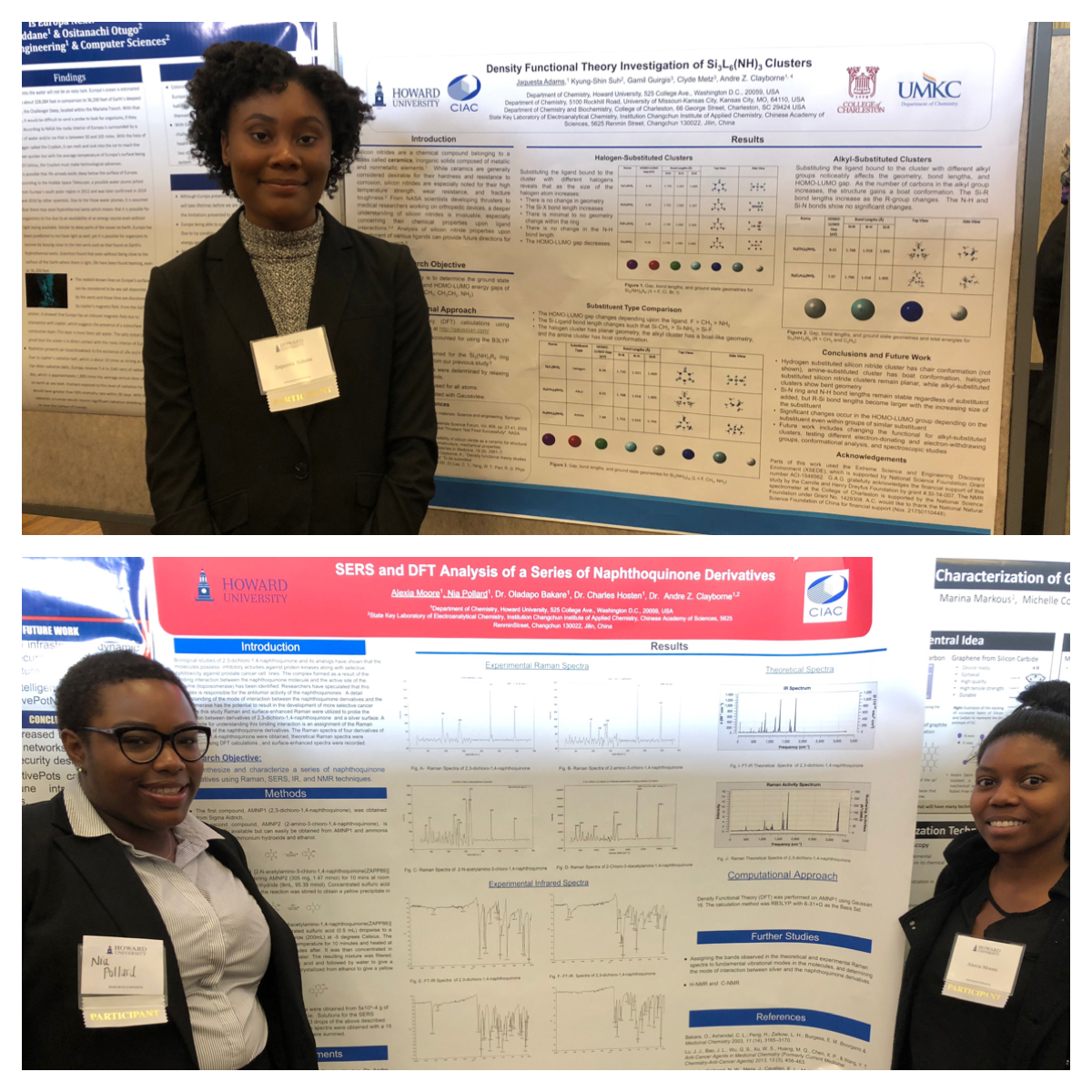
Dr. Clayborne (Not pictured), Jaquesta Adams, Nia Pollard, and Alexia Moore presented during Research Week at Howard University.

Dr. Clayborne presented during the Computational Research Symposium on Howard University’s campus held on April 4, 2018.
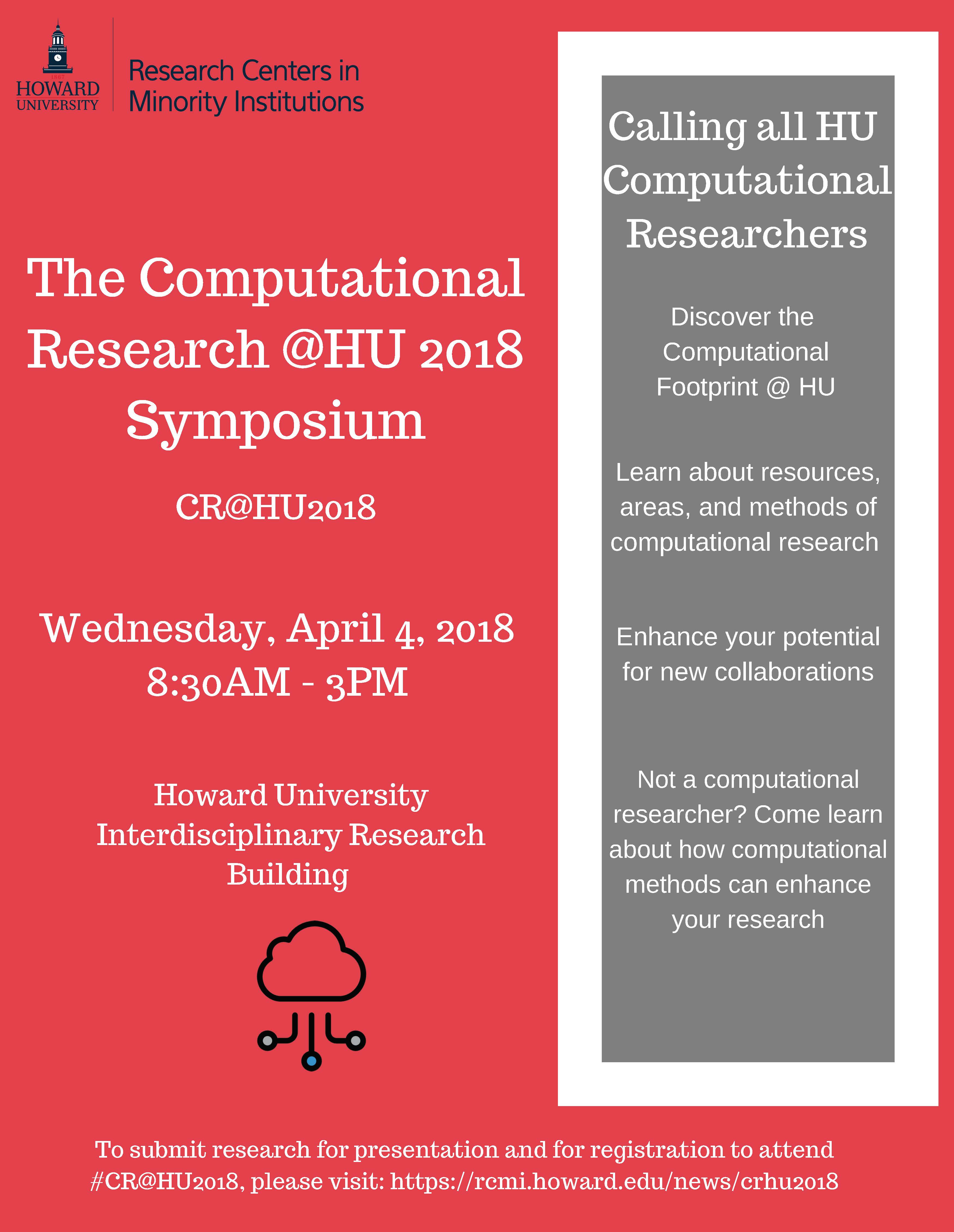
Are you engaged in computational research at Howard University? Would you like to know about the computational research occurring at Howard University? Please join us on April 4th from 8:30 – 3 PM to learn more about the diverse computational research occurring throughout Howard University. To register and find out more, please visit: https://rcmi.howard.edu/news/crhu2018
Ms. Jayla Morgan has joined the group! She is pursuing a B.Sc. in Chemistry. Welcome!
Mr. Oluwasheun Bello has joined the Clayborne Research Group! Welcome!
Our collaborative paper with Prof. Schnepf and Prof. Häkkinen on the metalloid gold cluster Au70 has been published in Chemical Communications.
Welcome Jaquesta and Sydnei, new undergraduate students to the Clayborne Research group!
Prof. Clayborne was awarded funding from the NSFC under the International Young Scientist Research Fund!
Andy, Abrar, Shin, Tielyr, Yung, and Prof. Clayborne presented at the MWRM in Lawrence, Kansas at the University of Kansas. Great job everyone!
If you are a current undergraduate and interested in performing research in the Clayborne Research Group, please read below before contacting Prof. Clayborne.
Typically, students must be sophomores before being considered as a candidate for joining the group. ALL students with a good academic record will be considered as potential researchers. Yes, this means if you major in Chemistry, Math, Biology, Physics, Chemical Engineering, or even Computer Science you will be considered as a potential researcher for the group.
All students must understand that research is a privilege and requires commitment from the student and mentor (in this case you and Prof. Clayborne). Does it mean you would not have time for a social life or to work a job? No. But it does mean that you must ask yourself can you devote a certain number of hours a week (at least 10) to meetings, performing research, training, and more reading. Research is a big deal.
It is STRONGLY recommended that ANY interested student view the research AND publication pages (or even a few posters scattered throughout the Chemistry Building). Since you are reading this, you are well on your way. Now, you may be thinking, “What if I do not understand anything?” Don’t worry, While it is not expected that you understand everything, any student considering joining a group needs to be familiar with the on-going work. Also, you can see if the papers seem somewhat interesting to you.
After viewing a few papers or even viewing some of the active projects, please send an EMAIL to Prof. Clayborne (Do Not Drop By Unannounced). The subject of the email should indicate you are an undergraduate interested in research. In the email, please indicate your rank, your major, a few of the chemistry (or physics or math or engineering or biology) courses you have taken up to this point, if you have performed research previously, and why you would like to perform research in this group. You may also add other information you think may be important.
What happens next? Great question. Prof. Clayborne will read your email, then contact you (usually within 2 working business days) to set up an appointment for an interview.